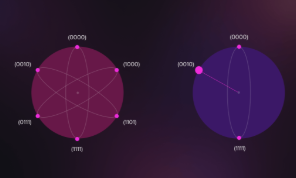

Quantum computing represents a significant shift in computational capabilities through the principles of quantum mechanics. It utilizes qubits, enabling superposition and entanglement to perform complex calculations more efficiently than classical systems. The implications of this technology extend beyond mere speed; they challenge traditional paradigms in various fields. Understanding these concepts is crucial, as they lay the groundwork for transformative applications that could redefine industries and problem-solving methods. What lies ahead in this evolving landscape?
The Basics of Quantum Mechanics
Quantum mechanics serves as the foundational framework for understanding the behavior of matter and energy at the microscopic scale.
Central to this framework are the concepts of wave-particle duality and the uncertainty principle.
Wave-particle duality posits that particles exhibit both wave and particle characteristics, while the uncertainty principle asserts limits on the precision of measuring these properties simultaneously, emphasizing the inherent unpredictability of quantum systems.
Understanding Qubits and Superposition
At the heart of quantum computing lies the concept of qubits, which serve as the fundamental units of information in this advanced computational paradigm.
Qubits can exist in multiple qubit states simultaneously, leveraging superposition principles. This characteristic allows quantum computers to process vast amounts of data more efficiently than classical systems, enabling unprecedented computational capabilities and fostering innovation in complex problem-solving scenarios.
Quantum Entanglement and Its Implications
Entanglement represents a fundamental phenomenon in quantum mechanics where pairs or groups of qubits become interconnected, such that the state of one qubit instantaneously influences the state of another, regardless of the distance separating them.
This unique relationship among entangled particles challenges classical notions of locality and enables potential advancements in information transfer, raising profound questions about the nature of reality and communication.
See also: Tech Giant’s CEO Resigns Amidst Growing Public Scrutiny and Controversy
Potential Applications of Quantum Computing
The interconnectedness established by entanglement opens the door to numerous potential applications of quantum computing across various fields.
Notably, quantum cryptography promises unprecedented security for data transmission, safeguarding against unauthorized access.
Additionally, in drug discovery, quantum algorithms can simulate molecular interactions with unparalleled efficiency, expediting the identification of promising compounds and ultimately revolutionizing pharmaceutical development, thus enhancing human health and freedom.
Conclusion
In the realm of computation, quantum computing represents a paradigm shift akin to discovering a new dimension in a three-dimensional world. Just as a painter unlocks new techniques to create depth and vibrancy, quantum technology offers unprecedented capabilities through qubits and entanglement. As researchers continue to explore this uncharted territory, the promise of solving complex problems—once deemed insurmountable—beckons, potentially revolutionizing fields from cryptography to drug discovery and reshaping the future of technology as we know it.